- Home
- The Winter Garden
- Tree Bark N-Z
A List of Interesting
Tree Bark, N-Z
The list of trees (and some shrubs) with interesting bark for winter interest continues.
Oxydendrum arboreum, sourwood—brown, deeply furrowed and ridged bark
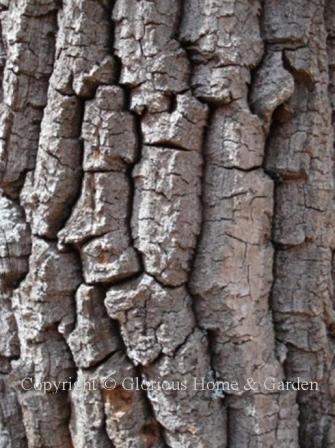 Oxydendrum arboreum
Parrotia persica, Persian parrotia—exfoliating, multicolored patchwork bark
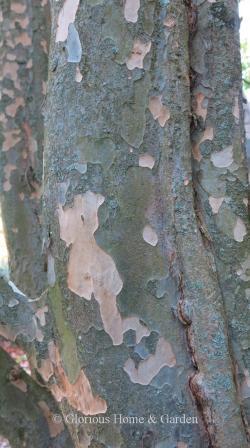 Parrotia persica
Pinus bungeana, lacebark pine—patchy exfoliating bark revealing splotches of multi-colored inner bark
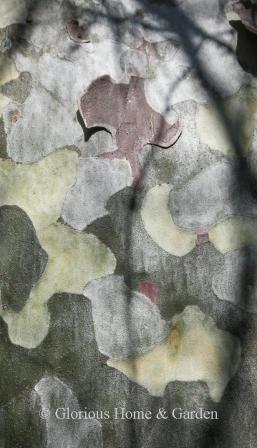 Pinus bungeana bark
Pinus nigra, Austrian pine—dark brown vertical furrows with lighter ridges
Philadelphus coronarius, mock orange—reddish-brown, exfoliating
Physocarpus opulifolius, common ninebark—exfoliates in long strips
Platanus occidentalis, American planetree or sycamore—grey bark exfoliates in patches revealing lighter greys beneath
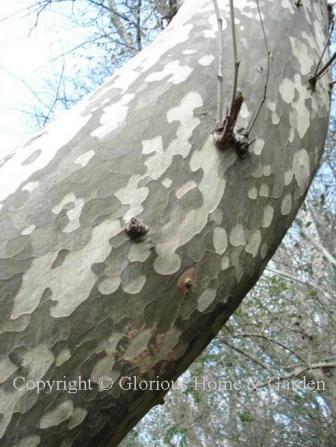 Platanus occidentalis
Platanus x acerifolia, London planetree, Zones 5-8. A cross between the American and Oriental species of planetrees, this one has gorgeous multi-colored bark.
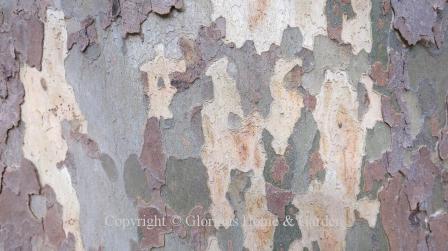 Platanus x acerifolia
Prunus maackii, Amur chokecherry—rich shining mahogany colored bark with horizontal lenticels; older specimens may exfoliate
Prunus serrula, paperbark cherry—shining red bark marked with horizontal lenticels, exfoliating with age
Prunus serrulata, Japanese flowering cherry--smooth gray bark with reddish horizontal lenticels
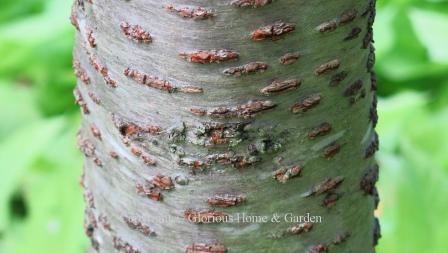 Prunus serrulata 'Shirotae'
Pseudocydonia sinensis, Chinese quince—very interesting flaking bark in shades of gray, brown and green
Salix matsudana ‘Tortuosa,’ Peking willow—interesting drooping and contorted branches
Salix melanostachys, black pussy willow—dark black branches in the winter and spring
Sassafras albidum, sassafras—red-brown deeply furrowed bark in mature specimens
Sequoia sempervirens, redwood--fshaggy, fibrous hide on mature trees. Of course, this can be a gigantic tree in the wild and needs plenty of room, so for most of us it will be admired in arboreta or national parks, though there are a few dwarf cultivars out there.
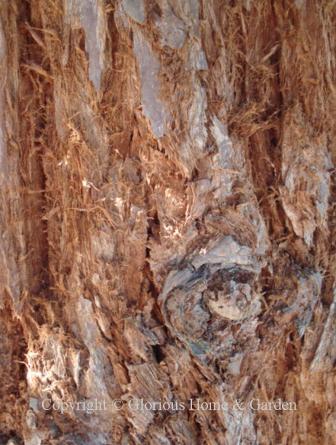 Sequoia sempervirens
Stewartia Bark
Stewartia koreana, Korean stewartia—reddish-brown to gray flaking bark. This beautiful one at Asticou Azalea Garden, Mt. Desert Island, Maine.
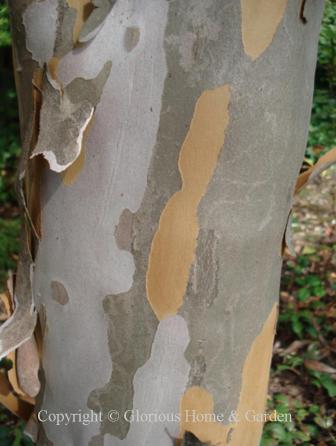 Stewartia koreana
Stewartia monadelpha, tall stewartia—tan bark exfoliates showing cinnamon patches-distinctive
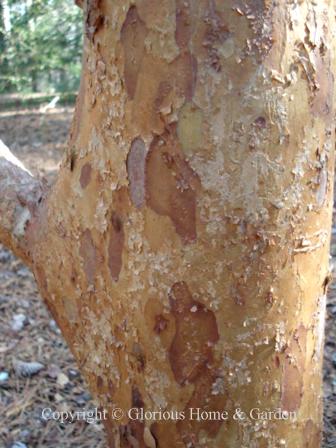 Stewartia monadelpha
Stewartia pseudocamellia, Japanese stewartia—smooth texture, beautiful pale mottled pattern of pinks, tans, browns, and grays-striking
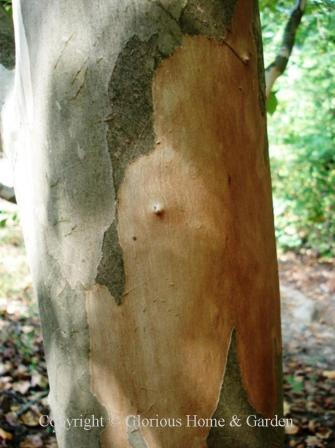 Stewartia pseudocamellia
Stewartia serrata, sawtooth stewartia, Zones 6-9. Stewartias have some of the handsomest bark which makes them outstanding specimens for winter interest. S. serrata's reddish bark flakes to reveal grays and lighter tan bark beneath.
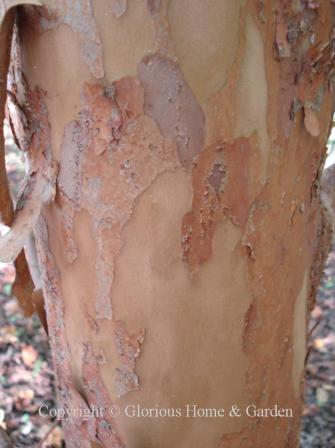 Stewartia serrata
Styrax japonicus, Japanese snowbell--dark gray-brown bark with irregular breaks with age on muscular sinuous-shaped trunks.
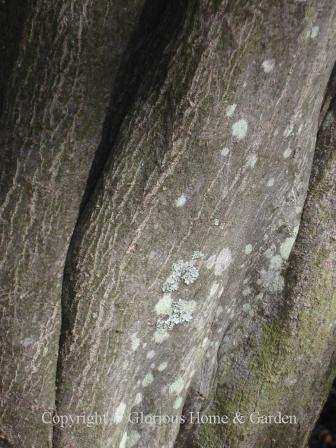 Styrax japonicus
Ulmus alata, winged elm--irregular vertical ridges of shaggy gray bark
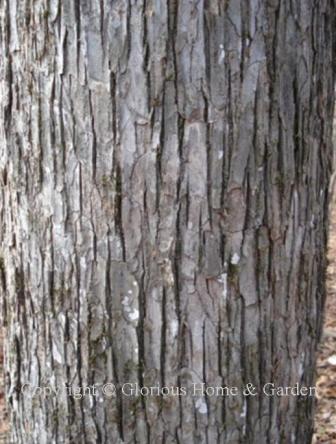 Ulmus alata
Ulmus parvifolia, lacebark elm—mottled, irregular patchwork pattern of grays, browns and reds
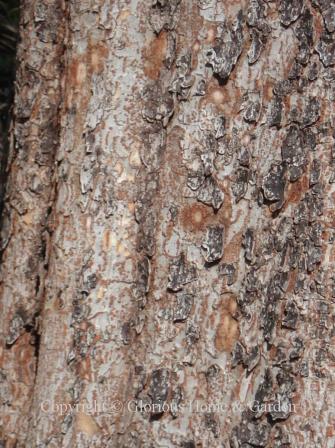 Ulmus parvifolia
Zelkova carpinifolia, Caucasian zelkova--smooth gray bark that flakes off to reveal orange underneath.
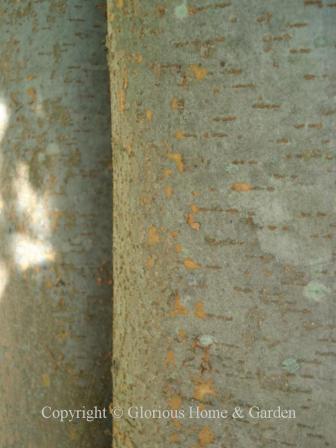 Zelkova carpinifolia
Zelkova serrata, Japanese zelkova--grayish-brown bark exfoliates with age into multi-colored puzzle-like patchwork
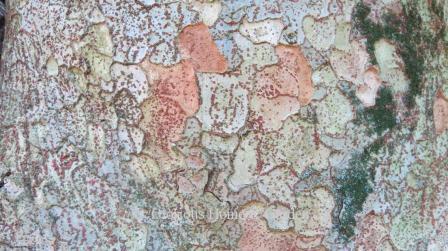 Zelkova serrata bark
Plant of the Month

Daphne odora
'Mae-jima'
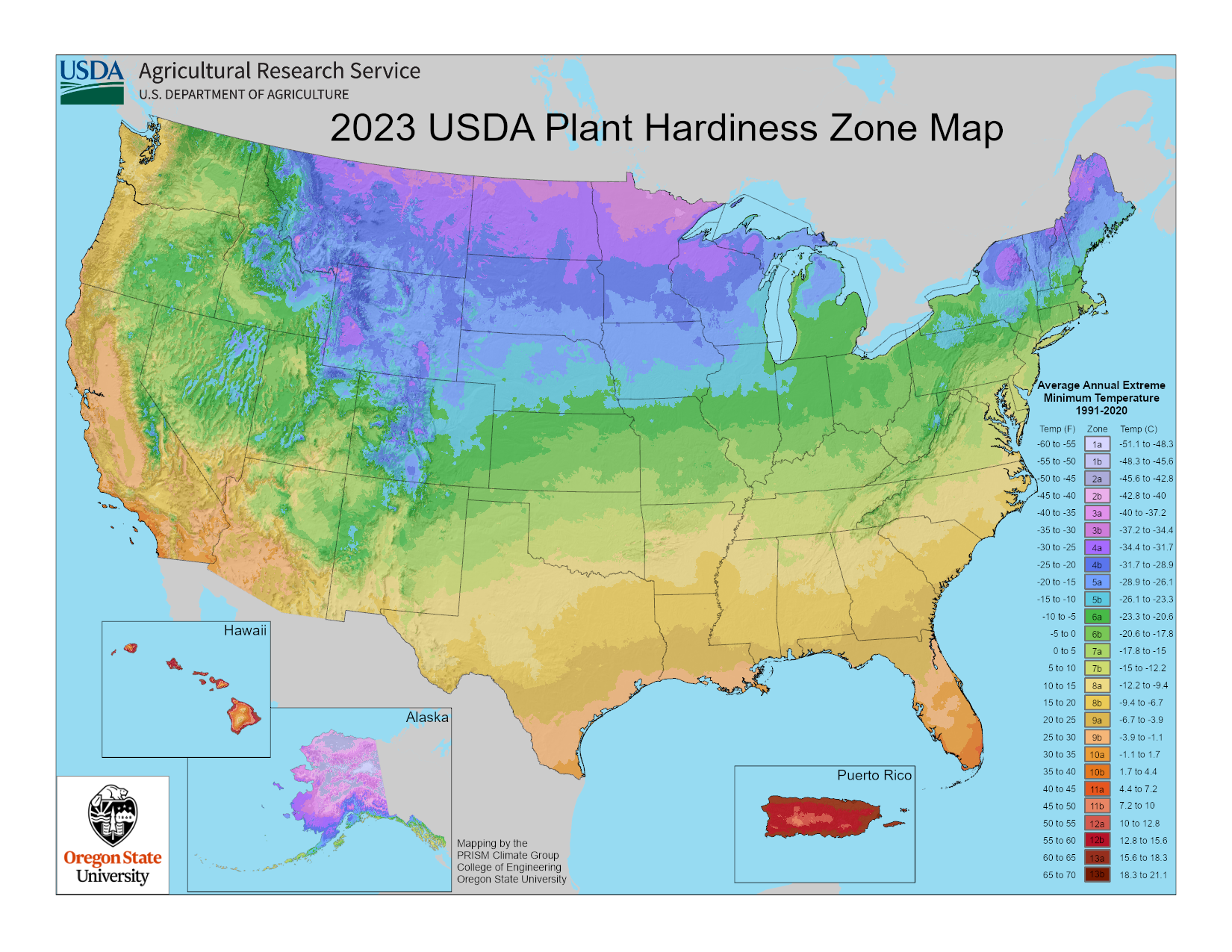
Updated new USDA Plant Hardiness Zone Map 2023.